 Skip to content
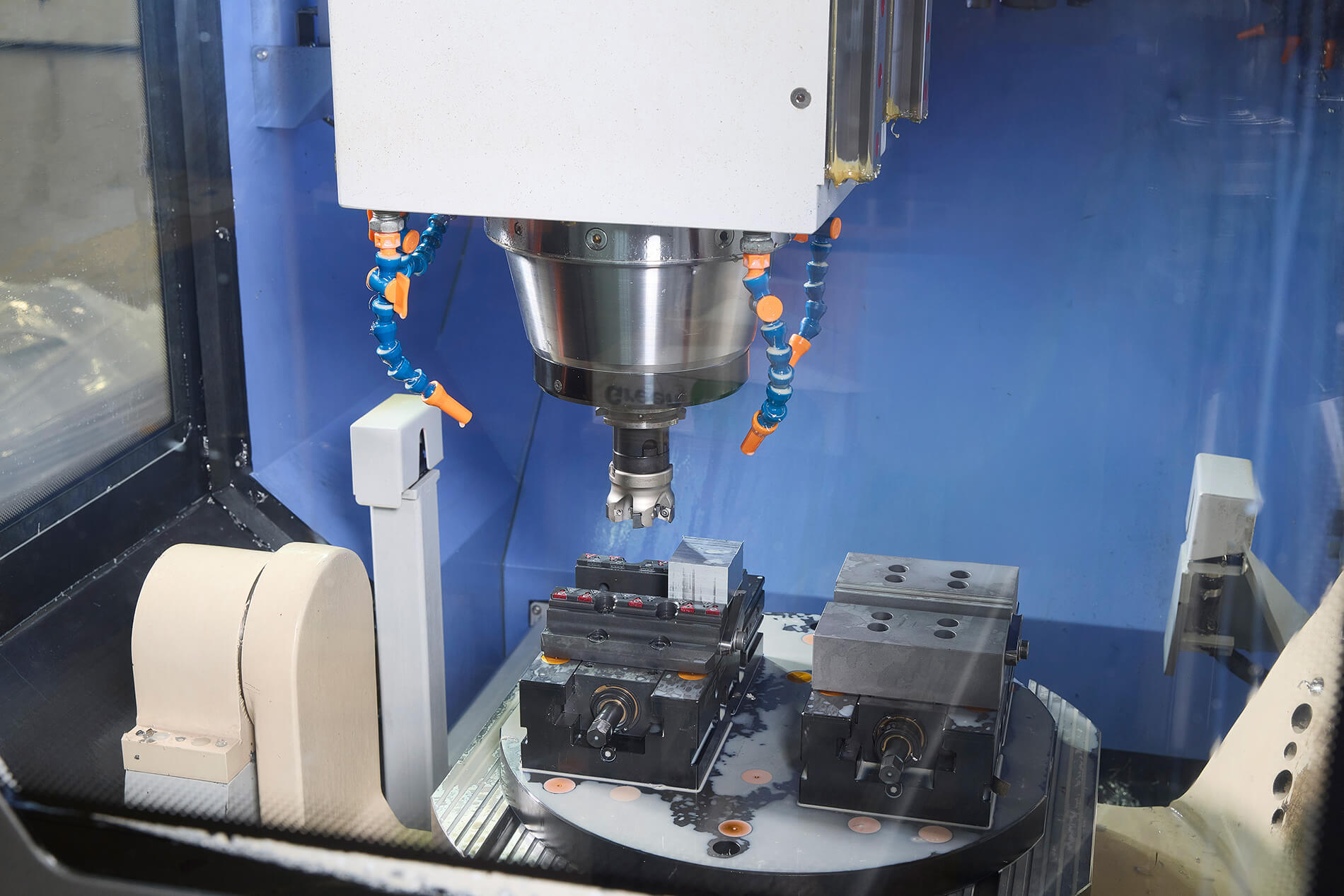
An affordable 5-axis CNC machine starts around $50,000 for entry-level units and runs $100,000 to $200,000 for production-capable models. But the purchase price is only about 15% of the total cost of ownership. Add CAM software ($15,000-$50,000/year), operator training ($5,000-$10,000), installation ($10,000-$30,000), annual consumables ($8,000-$15,000), and maintenance. For many product teams, outsourcing 5-axis work to a capable CNC supplier delivers better parts at lower total cost than buying a machine.
The search for an affordable 5-axis CNC machine usually starts the same way. Someone on your team machines a complex part on a 3-axis mill using four setups, burns through a full day of cycle time, and scraps the first piece because positional tolerance shifted between fixtures. The next conversation is: “Should we just buy a 5-axis?”
Maybe. But probably not yet.
The average cost of owning a 5-axis CNC machine in 2026 sits around $108,000 for new equipment and $36,000 for used. Entry-level kits start at roughly $72,000, and industrial-grade machines climb past $500,000. Those numbers look straightforward until you realize the purchase price is roughly 15% of what you’ll actually spend over the machine’s lifetime.
This guide breaks down what “affordable” really means in 5-axis CNC, what the hidden costs look like, and when outsourcing to a CNC machining services provider makes more financial sense than buying.
How Much Does an Affordable 5-Axis CNC Machine Actually Cost?
Entry-level 5-axis CNC machines start at $50,000 to $100,000 for basic positional (3+2) capability. Production-grade machines with simultaneous 5-axis, rigid frames, and reliable spindles run $100,000 to $200,000. High-end industrial systems for aerospace and medical work exceed $300,000 to $500,000. Used machines can cut those numbers significantly, but carry higher maintenance risk.
Here’s how the market segments break down in 2026.
Under $100,000 gets you basic 5-axis movement. These machines handle straightforward multi-sided parts in aluminum and mild steel. They typically lack RTCP (rotary tool center point) compensation, have smaller work envelopes, and miss features needed for detailed aerospace or medical work. For prototyping shops and small job shops doing 3+2 positional work, these can be a genuine entry point.
$100,000 to $200,000 is the sweet spot for production work. At this price, you get RTCP support, robust spindles, and work areas large enough for real parts. Most shops that need reliable, accurate 5-axis milling for aerospace trim, mold finishing, or multi-sided production parts end up in this range. The machines hold accuracy over long cycles and handle harder materials without excessive vibration.
Above $300,000 puts you in the tier of ultra-rigid frames, linear motors, advanced thermal compensation, and high-speed spindles rated at 20,000+ RPM. These machines are built for simultaneous 5-axis contouring on titanium, Inconel, and complex medical implants. If you need tight tolerances on difficult materials for thousands of hours per year, this is the performance level that pays back over time.
Used machines are available from $36,000 to $150,000 depending on age, hours, and condition. They can represent genuine value for experienced shops, but a single major repair can cost $5,000 to $15,000. Budget 10-20% of the purchase price annually for maintenance and repairs.
What Are the Hidden Costs of Owning a 5-Axis CNC Machine?
The machine’s sticker price is just the down payment. Real ownership costs include installation ($10,000-$30,000), CAM software ($15,000-$50,000/year), operator salaries ($60,000-$100,000/year for 5-axis programmers), annual consumables ($8,000-$15,000), and electricity ($5,000-$8,000/year). Over five years, total cost of ownership typically adds 30-50% on top of the purchase price.
Let’s walk through the line items most buyers overlook.
Installation isn’t plug-and-play. 5-axis machines need 380V power, reinforced floors rated for 1,000+ kg/m², compressed air, and professional installation that takes 1-2 months. Infrastructure prep alone can run $10,000-$30,000 before the machine cuts a single chip.
CAM software is a recurring cost. 5-axis programming requires specialized CAM licenses that cost $15,000 to $50,000 annually. These are subscription-based, not one-time purchases. You can’t run production 5-axis without them.
Skilled operators are scarce and expensive. 5-axis programmers and operators earn 50-80% more than standard CNC technicians, putting salaries in the $60,000 to $100,000/year range. New hires need 3-6 months of ramp-up time before they’re productive. Training costs run $5,000-$10,000 per person.
Consumables add up fast. Cutting fluid, tooling (especially for titanium and stainless), filters, and replacement inserts run $8,000-$15,000 per year. Hard-to-machine materials accelerate tool wear significantly.
Maintenance never stops. Once the warranty expires, replacing major components (electric spindle, CNC controller, ball screws) can cost $5,000-$15,000 each. Annual preventive maintenance and calibration adds another 5-10% of the machine’s purchase price.
A medical device company case study illustrates this well. Their initial plan was a $120,000 5-axis machine purchase. After adding first-year maintenance and consumables ($22,000), a qualified engineer ($80,000/year), and infrastructure prep ($15,000), the actual first-year cost exceeded $237,000. They had no prior 5-axis experience, so production quality risk was high on top of that.
Should You Buy a 5-Axis Machine or Outsource the Work?
If your machine would run fewer than 1,500 productive hours per year, outsourcing almost always costs less. If utilization exceeds 4,000 hours per year with consistent volume, ownership starts to win financially. Most companies land between those numbers, where outsourcing provides better economics and lower risk.
The math isn’t complicated once you frame it correctly.
Ownership makes sense when you have consistent, high-volume 5-axis work that would keep the machine running 4,000+ hours annually. At that utilization, the capital cost gets spread thin enough that per-part cost drops below outsourcing rates. You also need the in-house talent to program and operate the machine, the quality systems to verify the output, and the maintenance budget to keep it running.
Outsourcing makes sense when your 5-axis needs are intermittent, project-based, or spread across different part types and materials. You avoid the capital investment ($100,000-$500,000+), the software subscriptions ($15,000-$50,000/year), the operator salary ($60,000-$100,000/year), and the maintenance tail. You pay for finished parts instead of machine capacity you may not use.
The hybrid model works too. Some companies keep simple 3-axis work in-house and outsource complex 5-axis parts to specialized suppliers. This keeps the expensive machine investment off the books while maintaining internal capability for bread-and-butter work.
For most product development teams, startups, and companies without dedicated machining departments, outsourcing delivers better results. A supplier running 5-axis machines 8,000+ hours per year across multiple customers spreads those fixed costs (machine depreciation, software, operator expertise) across a larger base. That’s why outsourced 5-axis rates of $75-$300/hour can still deliver parts at a lower total cost than running your own underutilized machine.
What Should You Look for in an Affordable 5-Axis Machine?
If ownership makes financial sense for your operation, here’s what separates a smart purchase from an expensive mistake.
Rigidity matters more than speed. A heavy, rigid frame produces better surface finishes, extends tool life, and holds accuracy over long cutting cycles. Shops that switched to higher-mass machines have reported up to 80% reduction in monthly carbide tooling costs because the machine absorbs cutting energy instead of transmitting vibration to the tool tip.
Match the machine to your actual work. If you’re machining aluminum brackets with 3+2 positioning, you don’t need a $400,000 simultaneous 5-axis system designed for titanium turbine blades. Buying more machine than you need doesn’t improve your parts. It just increases your overhead.
Evaluate total cost of ownership, not just sticker price. A $80,000 entry-level machine with high maintenance costs, frequent downtime, and limited software compatibility can cost more over five years than a $150,000 machine that runs reliably with lower consumable costs. Calculate the 5-year TCO before comparing quotes.
Check spindle options carefully. High-speed spindles (15,000-24,000+ RPM) are essential for aluminum and small-feature work. High-torque spindles matter more for titanium, steel, and heavy material removal. Some machines offer dual-spindle options. Match the spindle to your primary material.
Thermal compensation is not optional for production. Machines without thermal compensation drift during long cycles as the structure heats up. For parts that need to hold tight tolerances over multi-hour operations, thermal stability directly affects scrap rate.
Factor in software compatibility. Make sure the machine’s controller works with your existing CAM software. Switching CAM platforms adds $15,000-$50,000 in licensing plus retraining costs.
When Outsourcing Beats Buying: A Practical Framework
For many engineering and sourcing teams, the strongest argument against buying is simple: you’re not in the CNC machining business. You’re in the product business. Owning a 5-axis machine means becoming a machine shop, with all the staffing, maintenance, quality control, and capital allocation that entails.
Outsourcing converts that fixed capital expenditure into a variable operating cost. You pay for parts, not machine hours. When your project ends or your design changes, you don’t have a $200,000 machine sitting idle. When you need a material you’ve never machined before, the supplier has the experience, the tooling, and the process already dialed in.
The question isn’t whether affordable 5-axis CNC machines exist. They do. The question is whether owning one is the most affordable way to get 5-axis parts.
For most companies evaluating this question, the answer is to start by getting quotes from qualified suppliers and comparing that cost against the full ownership model. If the numbers say buy, buy. If they say outsource, you’ve just avoided a quarter-million-dollar decision that would have drained capital from your actual product development.
Get an instant quote from Rapidcision to compare outsourced 5-axis pricing against your in-house ownership calculations.
Frequently Asked Questions
How much does an affordable 5-axis CNC machine cost?
Entry-level 5-axis machines start at $50,000-$100,000 for basic 3+2 positional capability. Production-grade machines with simultaneous 5-axis run $100,000-$200,000. Used machines are available from $36,000-$150,000. But purchase price is roughly 15% of total cost of ownership when you include software, operators, installation, consumables, and maintenance.
What is the total cost of owning a 5-axis CNC machine?
Over five years, total cost of ownership typically adds 30-50% on top of the purchase price. A $150,000 machine will cost roughly $225,000-$375,000 over five years when you add CAM software ($15,000-$50,000/year), operator salary ($60,000-$100,000/year), consumables ($8,000-$15,000/year), electricity, and maintenance.
Should I buy a 5-axis machine or outsource the work?
If your machine would run fewer than 1,500 hours per year, outsourcing almost always costs less. Ownership becomes cost-effective above 4,000 productive hours annually. Most companies with intermittent or project-based 5-axis needs get better economics and lower risk from outsourcing to a specialized supplier.
What hidden costs do buyers overlook with 5-axis machines?
The most commonly missed costs are installation and infrastructure ($10,000-$30,000), CAM software subscriptions ($15,000-$50,000/year), skilled operator salaries ($60,000-$100,000/year), and post-warranty repairs ($5,000-$15,000 per major component). Training ramp-up time, during which the machine produces slowly and inaccurately, is also underestimated.
Is a used 5-axis CNC machine worth buying?
Used machines can be genuine value for experienced shops. Budget 10-20% of the purchase price annually for maintenance and repairs. Inspect spindle hours, alarm history, maintenance logs, and overall machine condition carefully. A single spindle replacement can cost $5,000-$15,000, which erodes the savings fast if the machine wasn’t well maintained.