 Skip to content
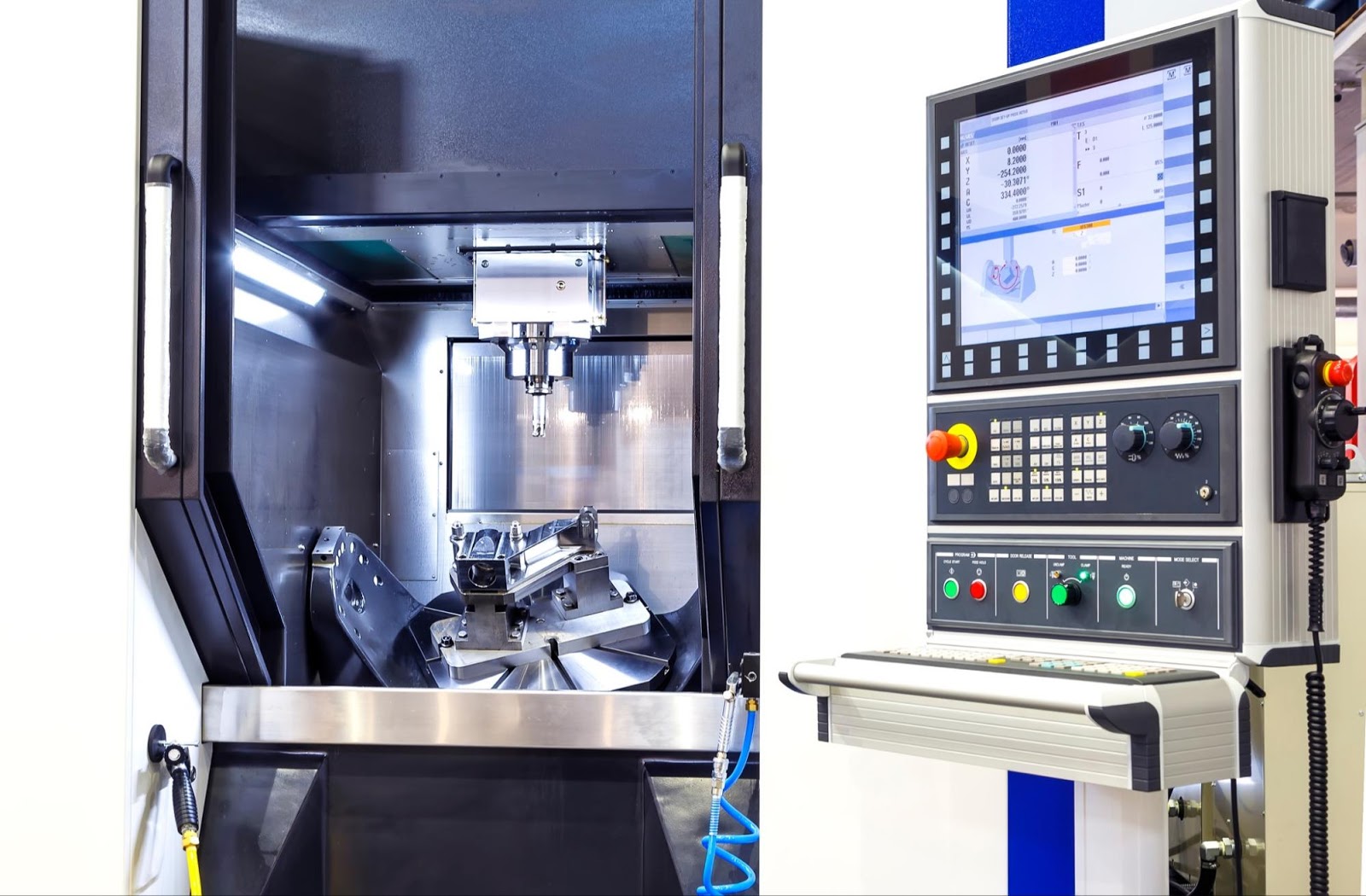
An affordable metal CNC machine ranges from $5,000 for benchtop mills to $48,000+ for industrial-grade vertical machining centers. Desktop machines handle aluminum and brass for prototyping. Production-ready VMCs start around $24,000 to $48,000 and machine steel, stainless, and titanium with real precision. But the purchase price is just the start. Tooling, software, training, and maintenance add 30-50% over five years. For many product teams, outsourcing metal CNC work delivers better results at lower total cost than buying a machine.
Every engineer eventually has the same thought: “We keep sending parts out. What if we just bought a machine?”
It’s a reasonable question. If you’re paying $50-$120 per hour for outsourced CNC machining services and you have steady work, the math seems obvious. But the gap between “a CNC machine that cuts metal” and “a CNC machine that reliably produces the parts your product actually needs” is wider than most first-time buyers expect.
An affordable metal CNC machine exists at every price point. The real question is whether affordable means cheap, or whether it means the right investment for your actual production requirements. This guide walks through what’s available, what it costs, and how to decide between buying and outsourcing.
What Does an Affordable Metal CNC Machine Actually Cost?
Benchtop CNC mills for metal start around $5,000-$6,000 and handle aluminum, brass, and light steel work. Mid-range enclosed mills with automatic tool changers run $24,000-$44,000. Industrial vertical machining centers (VMCs) capable of production-quality metal cutting start at $48,000 and climb from there. The price tracks directly with rigidity, spindle power, work envelope, and the materials you can reliably cut.
Here’s the pricing breakdown by tier.
$5,000-$10,000: Benchtop CNC mills. These are real milling machines, not routers pretending to cut metal. Cast-iron construction, ball screws, and enough rigidity to machine aluminum brackets and brass fixtures with reasonable accuracy. Machines in this range can hold tolerances around ±0.004″ and handle light steel work with proper tooling and feeds. They’re genuine tools for prototyping, one-off parts, and education. They are not production machines.
$24,000-$48,000: Enclosed CNC mills with production features. This is where metal CNC gets serious. Enclosed cabinets allow flood coolant and proper chip containment. Automatic tool changers eliminate manual tool swaps between operations. Industrial CNC controllers support standard G-code programming. Machines like small VMCs at $24,000-$42,000 handle milling, boring, drilling, tapping, and threading in aluminum, steel, and stainless with consistent results.
$48,000+: Industrial vertical machining centers. The entry point for industrial-grade metal machining sits around $48,000 for compact VMCs. These machines feature cast-iron construction, 8,000+ RPM spindles, full enclosures with flood coolant, and the rigidity to run multi-hour cutting cycles in steel without thermal drift. They weigh 3,000+ lbs, require 240V power, and produce parts at tolerances of ±0.001″ to ±0.003″ in aluminum and mild steel.
Used machines expand the budget. Used VMCs from major manufacturers show up at 40-60% of new pricing on resale platforms. A $100,000 machine that’s 5-8 years old might sell for $40,000-$60,000. The savings are real, but so is the risk. Inspect spindle hours, alarm history, and maintenance records before buying. A single spindle rebuild can cost $5,000-$15,000.
What Can an Affordable Metal CNC Machine Actually Do?
At entry-level pricing ($5,000-$10,000), a metal CNC machine mills aluminum, brass, copper, and mild steel. It handles prototyping, one-off parts, fixtures, and small-batch production of simple components. Tolerances of ±0.003″ to ±0.005″ are realistic with proper setup. These machines work for engineering teams that need to iterate on designs quickly without sending every part out.
At the production level ($24,000-$48,000+), capabilities expand significantly.
Materials. Production VMCs handle aluminum alloys, carbon steel, stainless steel (303, 304, 316), tool steel, brass, copper, and with proper tooling, titanium. The machine’s spindle power, rigidity, and cooling system determine which materials you can cut consistently versus which you can technically cut once before something breaks.
Operations. Milling, drilling, boring, tapping, threading, pocketing, contouring, and surface finishing. Machines with automatic tool changers run multi-operation jobs without manual intervention, which matters for repeat production.
Tolerances. Entry machines hold ±0.003″ to ±0.005″. Mid-range VMCs achieve ±0.001″ to ±0.002″. Industrial VMCs can hold ±0.0005″ on critical features with proper process control. The tolerance you’ll actually achieve depends on your setup rigidity, tooling quality, thermal management, and operator skill as much as the machine’s theoretical capability.
Part size. Work envelopes range from 6″ x 6″ x 6″ on benchtop units to 20″ x 16″ x 20″ on mid-size VMCs. Match the machine’s travel to the parts you actually make. Buying excess travel capacity you don’t use increases cost without benefit.
What an affordable metal CNC machine does not do well: very large parts, extremely hard materials without appropriate tooling investment, tight tolerances without proper environmental control, or high-volume production without automation. Know the limits before you buy.
What Hidden Costs Come with Owning a Metal CNC Machine?
The purchase price is roughly 15% of what you’ll spend over the machine’s lifetime. Tooling, software, training, maintenance, power, and consumables add 30-50% to the purchase price over five years. Most first-time buyers underestimate these costs significantly.
Tooling is the first surprise. End mills, inserts, drill bits, collets, and workholding (vises, clamps, fixtures) are consumable expenses. A starter tooling package for metal cutting runs $1,000-$3,000. Annual replacement costs depend on materials and volume, but $2,000-$8,000/year is typical for a production shop.
Software. CAM software for generating toolpaths ranges from free (basic packages) to $5,000-$15,000/year for professional licenses. If you’re machining anything beyond simple 2.5D geometry, you need capable CAM software. That’s a recurring annual cost.
Training. CNC operation has a learning curve. Professional training runs $1,000-$5,000 per person, and most operators need 3-6 months to become genuinely productive. During ramp-up, expect slower cycle times, more scrap, and lower utilization.
Maintenance. Lubrication, coolant management, spindle servicing, ball screw inspection, and eventual component replacement. Budget 5-10% of the machine’s purchase price annually for preventive maintenance. A neglected machine costs more in the long run through unplanned downtime and repair bills.
Power and infrastructure. Industrial VMCs need 240V power and dedicated circuits. Compressed air systems, chip evacuation, and coolant filtration add to the infrastructure bill. Electricity runs $5,000-$8,000/year for regular use.
Should You Buy a Metal CNC Machine or Outsource?
Buy if you have consistent, repetitive metal machining work that would keep the machine running 1,500+ hours per year. Outsource if your CNC needs are intermittent, project-based, or involve varied part types and materials that would require tooling and programming changes between every job.
Here’s the decision framework.
Buying makes sense when you run the same types of parts repeatedly, your volume justifies the capital investment, you have (or can hire) a skilled operator, and turnaround time from external suppliers is creating genuine production bottlenecks. In-house machining gives you schedule control and eliminates the 1-3 week lead time that outsourcing typically adds.
Outsourcing makes sense when your machining needs change frequently, you lack in-house CNC expertise, your volumes don’t justify machine utilization above 1,500 hours/year, or you need capabilities (tight tolerances, exotic materials, multi-axis work) that would require a machine beyond your budget.
The math. A $48,000 VMC with $15,000/year in operating costs (tooling, software, maintenance, power) and a $55,000/year operator runs roughly $118,000 in the first year. At 2,000 productive hours, that’s $59/hour. At 1,000 hours (common for companies without full-time machining workload), it’s $118/hour. Outsourced rates of $50-$120/hour start looking very competitive when your utilization is low.
Most product development teams, hardware startups, and companies without dedicated manufacturing departments get better results by outsourcing. You get access to professional equipment, experienced operators, quality systems, and material expertise without the capital commitment.
How to Choose the Right Affordable Metal CNC Machine
If the buy decision makes sense for your operation, here’s what to prioritize.
Rigidity first. Cast-iron construction, heavy mass, and solid linear guides produce better surface finishes, longer tool life, and more consistent accuracy than lightweight frames. A heavier machine absorbs cutting energy instead of transmitting vibration to the cutting edge. This is the single most important factor for metal machining quality.
Match the spindle to your materials. Aluminum and brass want high RPM (8,000-15,000+). Steel and stainless want torque. Check that the spindle delivers adequate power at the RPM range where your primary materials cut best. An underpowered spindle on steel means slow feeds, poor finishes, and excessive tool wear.
Prioritize an enclosed design with coolant. Metal machining generates chips and heat. An enclosed cabinet with flood coolant capability isn’t a luxury. It’s a requirement for consistent metal cutting quality, tool life, and shop safety.
Check controller compatibility. Make sure the CNC controller supports standard G-code and works with your existing or planned CAM software. Proprietary controllers that lock you into a single software ecosystem limit your flexibility and increase long-term cost.
Think about what you’ll need in two years, not just today. Can the machine accept a 4th-axis rotary? An automatic tool changer? Upgraded spindle? A machine that grows with your needs costs less over time than one you’ll outgrow and replace.
Conclusion
An affordable metal CNC machine can be a genuine asset for shops and product teams with consistent, repetitive metal machining needs. The range from $5,000 benchtop mills to $48,000+ VMCs covers everything from prototyping to production, and the technology has never been more accessible.
But “affordable” means more than the purchase price. Total cost of ownership, including tooling, software, training, and maintenance, is what determines whether the investment actually saves money. For companies with low or variable machining utilization, outsourcing to a qualified supplier delivers professional-quality metal parts without the capital risk.
If you’re comparing the cost of buying versus outsourcing, start by getting real quotes for your actual parts. Get an instant quote from Rapidcision to see what outsourced metal CNC machining costs for your specific project, and use that number as the benchmark for your buy-versus-outsource decision.
Frequently Asked Questions
How much does an affordable metal CNC machine cost? Benchtop CNC mills for metal start at $5,000-$6,000. Enclosed mills with automatic tool changers run $24,000-$44,000. Industrial vertical machining centers (VMCs) capable of reliable production start at $48,000. Used machines sell at 40-60% of new pricing but carry higher maintenance risk.
What metals can an affordable CNC machine cut? Entry-level machines handle aluminum, brass, copper, and mild steel. Mid-range and industrial VMCs machine aluminum alloys, carbon steel, stainless steel (303, 304, 316), tool steel, and with proper tooling, titanium. The key factors are spindle power, machine rigidity, and coolant capability.
What tolerances can a budget metal CNC machine hold? Benchtop CNC mills hold ±0.003″ to ±0.005″. Mid-range VMCs achieve ±0.001″ to ±0.002″. Industrial VMCs can reach ±0.0005″ on critical features. Achievable tolerance depends on setup rigidity, tooling quality, thermal management, and operator skill as much as machine capability.
Is it cheaper to buy a CNC machine or outsource machining? That depends on utilization. At 2,000+ productive hours per year, in-house machining often costs less per hour. Below 1,500 hours, outsourcing is typically more economical because the fixed costs of ownership (machine, operator, software, maintenance) get spread across too few parts.
What hidden costs come with owning a metal CNC machine? Major hidden costs include tooling replacement ($2,000-$8,000/year), CAM software licenses ($5,000-$15,000/year), operator training ($1,000-$5,000 per person), preventive maintenance (5-10% of purchase price annually), electricity ($5,000-$8,000/year), and infrastructure upgrades (240V power, compressed air, coolant filtration).